
Last updated November 16, 2026
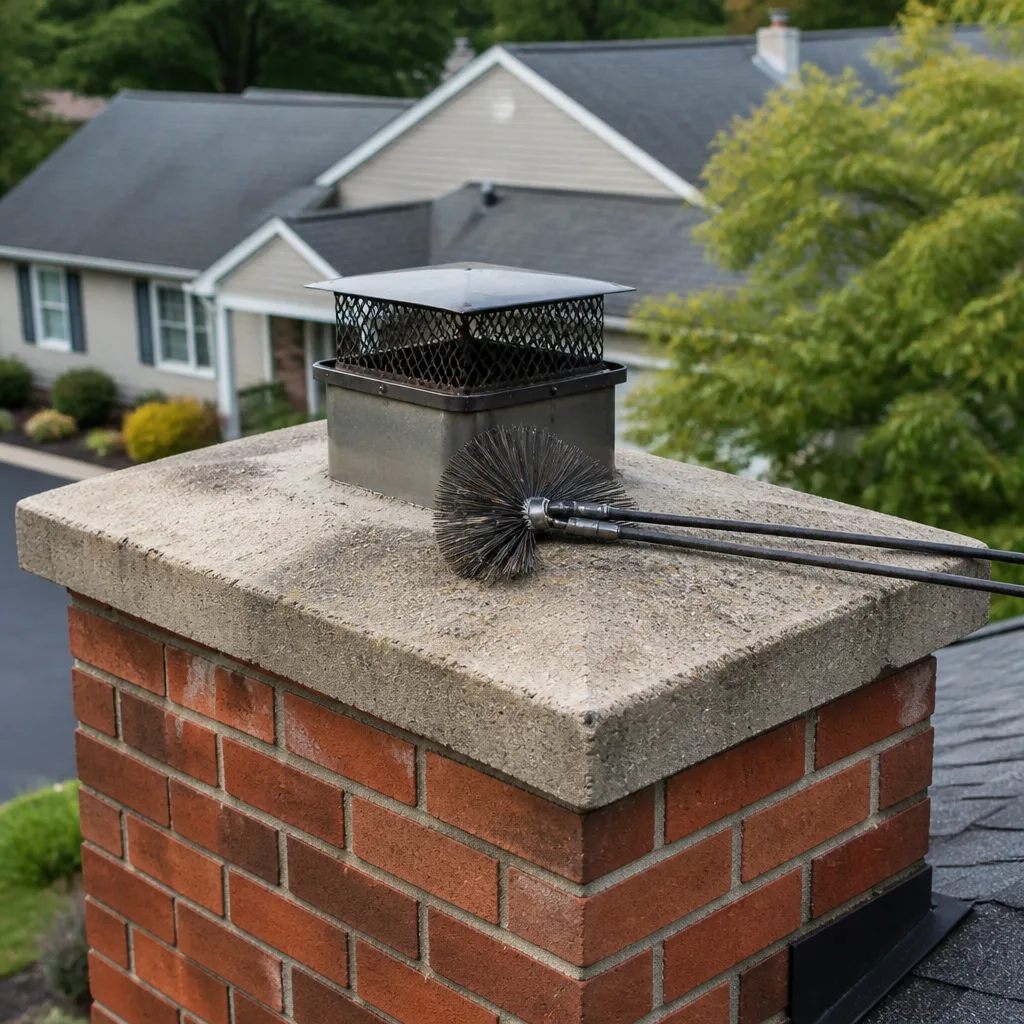 Sweep & inspection
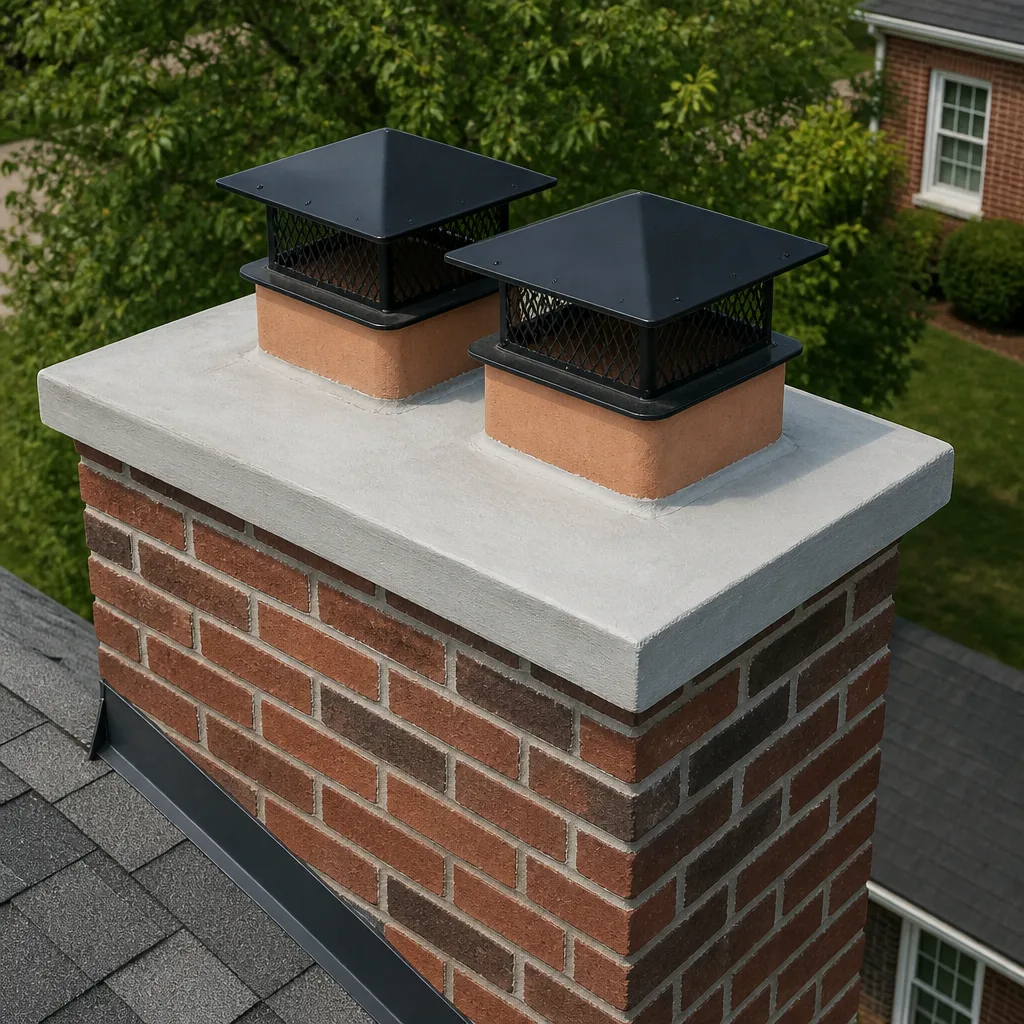 Caps & crowns
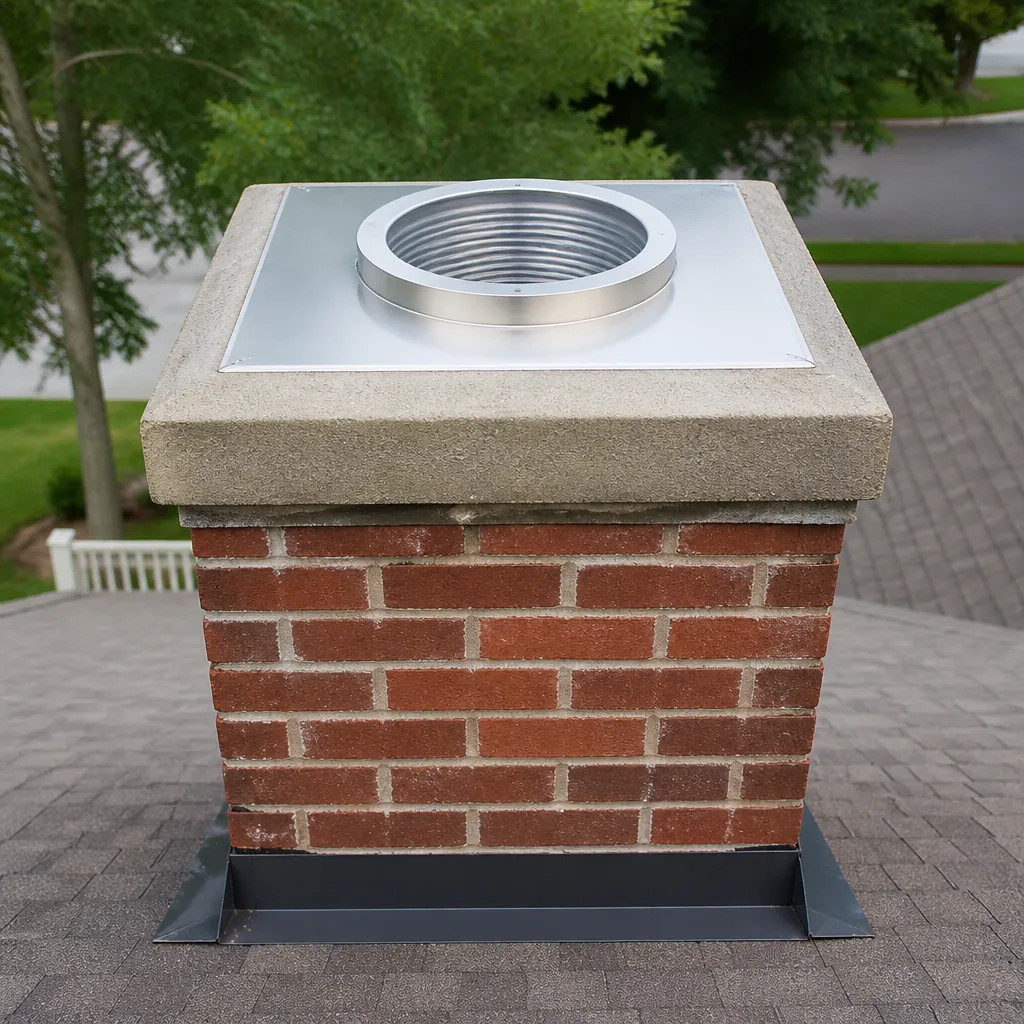 Flue relining
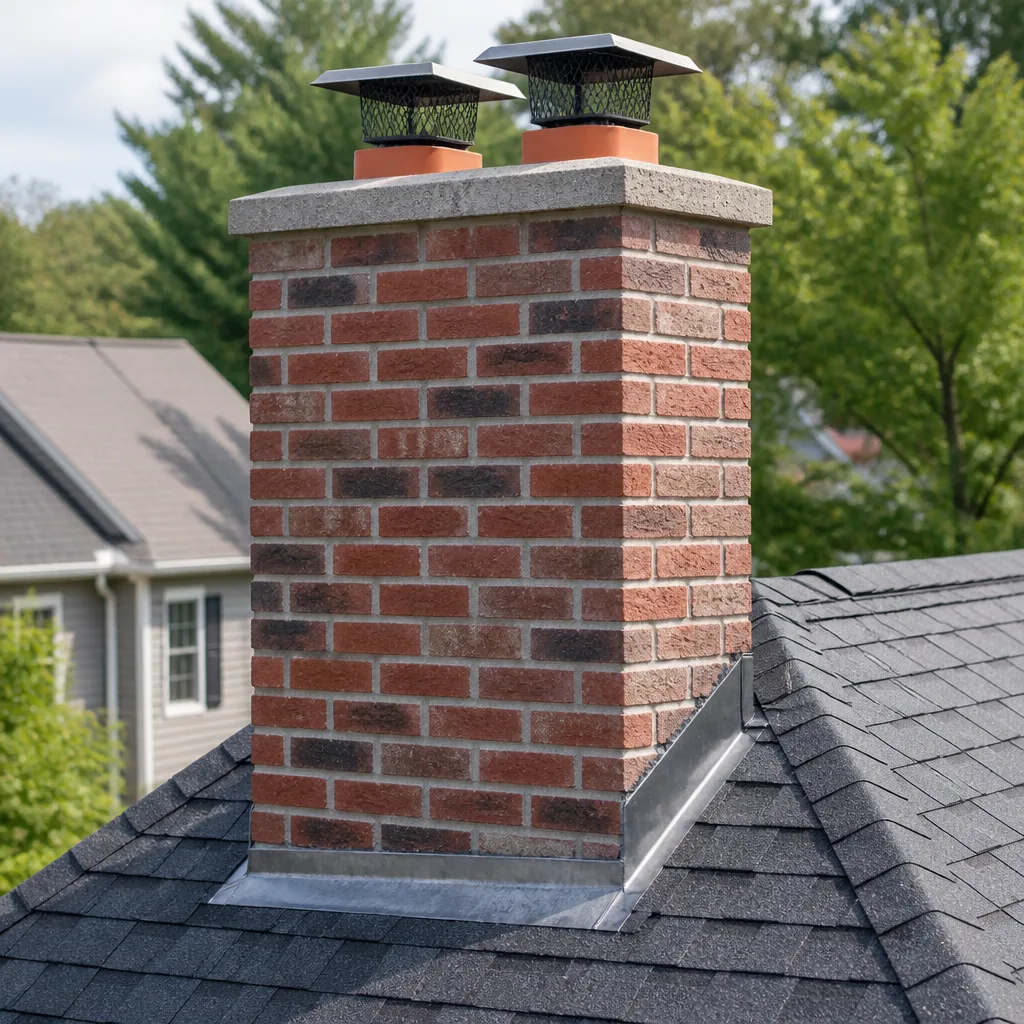 Masonry repair
 Gas fireplace service
Level 1 sweep and inspection to the NFPA 211 annual standard - flue, crown, cap, and flashing checked and photographed
Chimney sweep logs do not sweep chimneys. They loosen some creosote - which then falls where a brush and vacuum still have to collect it.
Chimney Cleaning Permits, Codes & Inspections in Vacaville, CA: What You Need to Know
Chimney liner replacement is one of the most commonly unpermitted home improvements in California, and it rarely happens because a homeowner is cutting corners. It happens because nobody explained where “cleaning” ends and “alteration” begins. A sweep brushes soot out of a flue that already exists; a reline changes the flue itself, and that change lands in a different regulatory pile. This guide draws that line for Vacaville homeowners. We’ll cover what the California Residential Code exempts, when the City of Vacaville’s building department wants a permit, how a typical chimney permit moves through review, what Bay Area Air Quality Management District rules mean for the appliance in your fireplace, and how documented work protects you at the closing table.
Quick Answer
Routine chimney cleaning does not require a permit in Vacaville, CA, but structural work that alters the chimney does. Relining, firebox rebuilding, masonry repair, and most cap or chase changes typically need a building permit from the City of Vacaville, and the work must meet the California Residential Code along with Bay Area Air Quality Management District rules. A professional inspection is what tells you which side of that line your chimney sits on.
Styles & brands we work with
- Sweep & inspection
- Caps & crowns
- Flue relining
- Masonry repair
- Gas fireplace service
Table of Contents
- Cleaning vs. Alteration: Where Vacaville’s Permit Line Falls
- What’s Explicitly Permit-Exempt and What Isn’t
- How the City of Vacaville Handles a Chimney Permit
- BAAQMD Spare the Air Rules and Your Fireplace
- What Unpermitted Chimney Work Means at a Solano County Sale
- The Inspections Every Chimney Needs (and When)
- How Good Documentation Helps a Future Appraisal
- Questions to Ask Before You Book the Work
Cleaning vs. Alteration: Where Vacaville’s Permit Line Falls
The dividing line is simple to state and easy to misread. A chimney sweep removes creosote and soot from a flue and firebox that already exist. Nothing about the structure changes. That’s maintenance, and maintenance doesn’t need the city’s sign-off. When the work changes the shape, material, or structural nature of the chimney, it becomes an alteration, and in most California jurisdictions that means a permit.
In our experience, the confusion shows up most often with liners. A homeowner hears “your flue needs a liner” and mentally files it next to “your flue needs a sweep.” To a builder or inspector, those are different jobs. A stainless liner system installed inside an existing masonry chimney, like the DuraFlex systems we work with, creates a new venting assembly inside an old structure. That’s an alteration. Firebox rebuilds and masonry repair on a chimney that’s cracking or spalling are also alterations, because those components are load-bearing and fire-rated. The Vacaville housing stock includes a lot of older masonry chimneys from the mid-twentieth century, and this is where the question comes up most: a chimney built before modern venting standards often needs work that wasn’t required when it went up.
Here’s the practical summary for Vacaville:
- Maintenance (no permit): sweeping, creosote removal, inspection, minor cap cleaning, and hardware checks
- Alteration (permit usually required): liner installation or replacement, firebox rebuild, masonry or crown repair, chase modification, and most damper changes
- Gray zone (ask the department): cap replacement, top-sealing damper installation, and flashing repair, where scope varies by job
One caution: we never suggest homeowners treat a chimney as a do-it-yourself project. Masonry chimneys and their fire-rated components handle combustion gases and heat, and work done wrong creates a hazard nobody can see. If it’s anything past sweeping, it belongs in the hands of a trained professional. A chimney repair professional works on fire-rated assemblies every day and knows what a building inspector looks for.
What’s Explicitly Permit-Exempt and What Isn’t
California Residential Code generally treats ordinary maintenance and repair of a building’s existing components as work that doesn’t require a permit, while structural alterations do. Here’s the honest version for chimneys: the code doesn’t publish a neat checklist labeled “chimney.” Whether a specific job is exempt comes down to scope, and that’s why a written scope matters more than a verbal one.
Sweeping is the clearest exemption. Nobody in Vacaville is going to hand you a permit to brush a flue. Inspection is the same – it’s observation, not construction. Beyond that, the picture shifts by job:
- Sweeping and creosote removal. Maintenance. No permit. This is the annual service that keeps a flue functioning.
- Level 1, 2, and 3 inspections. Observation only. No permit. These are documentation jobs tied to safety and property transactions, and they matter later in this guide.
- Liner installation or replacement. Structural alteration. Permit typically required. This is the one homeowners most often miss.
- Firebox rebuilds and firebox liner work. Alteration. Permit typically required, and often paired with an inspection at completion.
- Masonry repair to the chimney exterior. Alteration where structural. A repointed flue and a rebuilt crown can be the same category.
- Cap and chase cover installation. Often considered repair, but scope-dependent. Ask the department if the installation involves a chase or chimney crown modification.
One way to read this without memorizing anything: ask yourself whether the finished job looks the same as the old one, only cleaner and sound. If yes, you’re probably in maintenance. If it looks different, you’re probably in alteration. The Vacaville building department is the authority on the specific job in front of you, and a straight question to them – not a guess from a contractor who dabbles – is the fastest way to a real answer.
How the City of Vacaville Handles a Chimney Permit
Vacaville’s building department issues permits for its own jurisdiction, and Solano County handles unincorporated areas outside city limits. If you’re inside the Vacaville city limits, the city reviews it; if you’re on a property outside the boundary, the county does. That distinction catches people every so often, especially on acreage properties where boundaries are less obvious.
For a chimney alteration, the general path runs roughly like this:
- Scope of work. The contractor defines what’s being replaced or repaired, in writing, with materials specified. Vague scopes are the number-one reason a permit application bounces back.
- Application and plan review. The department checks the paperwork against code requirements. Where the review lands in the department’s queue determines how long it takes; a straight liner swap and a full firebox rebuild don’t get the same scrutiny.
- Permit issuance. The permit carries an inspection schedule for the specific job. Alterations involve at least one inspection, and sometimes more for work that gets covered by masonry.
- Inspection at the right stage. For a reline, inspection happens before the flue is closed up or finished. That matters: a project where the contractor finishes first and asks the inspector later tends to get reopened.
- Final sign-off. The permit is closed, the file records work performed, and your documentation is now part of the building record.
Timelines for these permits vary with the department’s workload and the complexity of the scope, and we never quote a number of days over the phone. What we do tell Vacaville homeowners is that the permit step is where work gets delayed most often, and it’s usually preventable. If you’re thinking about a reline or masonry repair, tell the contractor up front that you’d like to know whether a permit is required. A specialist who handles this routinely can give you the answer and scope the job properly. A generalist may not know the question exists.
BAAQMD Spare the Air Rules and Your Fireplace
Chimney work in Vacaville happens under a second set of rules that most homeowners never think about: air quality. The Bay Area Air Quality Management District, usually shortened to BAAQMD, governs what can legally burn inside a fireplace in this region, and the rules reach past the fireplace itself into anything attached to it.
The core of it is the fireplace appliance. Older fireplaces and non-certified wood stove inserts are restricted under BAAQMD rules, and during Spare the Air alerts, wood burning is prohibited throughout the district, including Vacaville. The district has used the same Spare the Air program for years to trigger burn bans on poor-air-quality days, and those days are more common in the valley during winter inversions. When air gets trapped close to the ground, a fire’s smoke becomes part of a problem the whole region shares.
How this touches chimney work:
- Relining. If you’re relining a chimney, the liner you install has to suit the appliance actually venting into it. Venting a noncompliant fireplace through a new liner is a waste of money and doesn’t fix the legal issue.
- Insert installations. If you replace an old fireplace with a certified wood or gas insert, the appliance has to meet current emission standards, and the venting has to match the appliance manufacturer’s specification.
- Documentation. Appliance spec sheets and venting documentation make a permit review cleaner and give an inspector a basis for sign-off.
In our experience, this is also why a chimney specialist, rather than a sweep-only service, is the right call in Vacaville. A specialist reads the appliance requirement alongside the venting requirement, and both have to be right before the fire lights again. We stock and install professional-grade venting brands including DuraFlex, HeatShield, Gelco, and Olympia Chimney, and we specify them for a reason: they’re rated for the jobs they do, and their documentation makes for a clean permit file.
What Unpermitted Chimney Work Means at a Solano County Sale
An unpermitted chimney alteration doesn’t sit quietly. It follows the house, and at sale time, it becomes a disclosure issue. California sellers complete a transfer disclosure statement that includes questions about whether work on the property was done with permits. A liner installed without one isn’t automatically fatal, but it’s a tangle most sellers would rather not discover three weeks before closing.
The friction points we see, in general terms:
- Buyers ask. A home inspector or buyer’s chimney specialist finds an obvious reline with no permit record. The buyer wants to know why.
- Insurance carriers care. A new owner changing insurers may be asked about the fireplace and its venting. An unpermitted alteration creates a question mark at the worst moment.
- Appraisers work from records. The property’s permit history is part of how its condition is understood. Work with no record is harder to count on.
- Remediation is possible, not free. Sometimes a retroactive permit is available. Sometimes the work gets opened up and inspected, which costs real money.
Here’s the thing: the permit step is the inexpensive part of a reline, compared with the liner itself. Skipping it saves a little at installation time and can cost both time and money when the house changes hands. In a market like Vacaville, where turnover includes a lot of older homes in neighborhoods near downtown and along the older tracts west of the freeway, buyers’ agents do ask. The seller who can say “permitted, inspected, and signed off” has a smoother transaction than the one who can’t.
We’ve said before that the inspection is what tells you what’s inside the flue. That’s the same principle that protects a sale: documented evidence, not a verbal assurance.
The Inspections Every Chimney Needs (and When)
Chimney inspections divide into three levels, and which one you need depends on what’s happened to the chimney, not on how long it’s been since the last sweep. This is one of the more useful distinctions for a Vacaville homeowner to know, and it’s where a chimney specialist differs from a contractor with a brush.
- Level 1. A visual inspection of the accessible portions of the chimney, firebox, and flue. This is the annual-maintenance level. If you burn regularly and nothing has changed, this is the inspection your sweep performs alongside the cleaning.
- Level 2. The inspection you get when something changes. A house sale, a leak, a new appliance, or a chimney that hasn’t been looked at in years. It includes a camera survey of the flue internals, which is how you see cracks, gaps, and liner damage you couldn’t otherwise know about.
- Level 3. An internal inspection that requires access beyond what a camera can reach. Rare, and reserved for a specific known or suspected problem.
The level that comes up most in Vacaville is Level 2, because of the two situations that generate it: property transactions and changing appliance loads. The Vacaville climate matters here, and not in the way people expect. We don’t see hard winter frosts. What we get is a long burn season with cool, damp-morning air and dry valley summers, and that combination is easy on masonry compared with a true freeze. The real wear inside a Vacaville chimney comes from creosote, heat, and time, not from weather. That’s why the camera survey matters. The outside of a chimney tells you almost nothing about what’s happening in the flue.
A proper inspection gets you a photo report of the flue as found. If a liner is needed, you’ll see the reason. If it can wait a season, you’ll see that too, and we’ll tell you it can wait.
How Good Documentation Helps a Future Appraisal
Chimney work leaves a paper trail that turns out to matter further downstream than most homeowners expect. That trail has three parts: the permit record, the inspection report, and the invoice with materials named. When all three line up, the chimney is one of the best-documented systems in the house. When they don’t, it becomes a question.
Here’s the practical value of each:
- The permit record. Filed with the city, searchable, and proof that work was performed to code. This carries through the sale, the appraisal, and an insurer’s file.
- The inspection report. An inspector’s condition record, with photos. Useful now, and a baseline for the next inspection years later. When a future technician can see the 2026 condition, they can tell you what’s changed.
- The invoice with materials specified. This is where naming the product matters. A reline documented as “stainless liner system, DuraFlex” says far more than “chimney repair.” Product names tell the next professional what’s already there and how long they can expect it to hold up.
We keep this simple because we do it on every job. When we specify HeatShield for resurfacing, or a DuraFlex liner for a reline, or Gelco components, those names go in the documentation. That’s one of the differences between a chimney-only specialist and a generalist. We specify professional-grade materials because they’re what the job calls for, and we name them because documentation is part of the service.
For Vacaville homeowners, the practical takeaway is this: don’t accept a verbal-only handoff on chimney work. Ask for the inspection report with photos, ask for the invoice that names materials, and confirm what happened with the permit. You’re not being difficult. You’re building the file that protects you when the house changes hands, which, in a market where a lot of older properties get bought and resold, is a real thing.
Questions to Ask Before You Book the Work
The right questions sort the specialist from the generalist faster than any review. We suggest you ask them of us as much as of anyone else. A company that can answer them plainly, without hedging, is a company that knows what it’s doing.
- Does this job need a permit? If the answer is “no, never,” walk away. Some jobs need one, and the answer should reflect the scope you were quoted.
- What inspection level is this, and will I get photos? For a sale or a suspected problem, Level 2, with a camera survey and a photo report.
- Which products will be used? The answer should name the actual system: DuraFlex, HeatShield, Gelco, Olympia Chimney. “Standard liner” is not an answer.
- What’s the sequence? Is the inspection done before the scope is written? It should be. Recommendations without camera evidence are guesses.
- Can this wait? Ask directly. A specialist will say clearly when work can safely wait a season, and that’s a sign the estimate isn’t being inflated.
- What does the city actually require for this job? Not “most places,” but Vacaville’s building department specifically. They should know the difference.
One thing we’ll add: no specialist should ever tell you to run a fireplace or stove that fails inspection, and no specialist should encourage a homeowner to handle fire-rated materials. Those are hard rules for a reason.
Common Mistakes to Avoid
- Assuming all chimney work is maintenance. A liner or firebox rebuild is an alteration, and treating it as cleaning is how unpermitted work starts. If the finished job won’t look the same as the old one, call the city and ask the permit question.
- Booking a generalist because the quote was lower. The permit question is answer number one at that price, and a generalist may not know it exists. In Vacaville, this shows up most with older masonry chimneys that need code-correct venting.
- Letting a contractor finish before inspection. A reline with a masonry finish already in place has to be reopened to be inspected, and that costs time and money. Get the inspection step into the schedule from the start.
- Accepting a recommendation with no photos. Anyone can tell you a liner is needed. Very few will show you the inside of the flue and explain what you’re looking at. Don’t accept the verbal version.
- Ignoring BAAQMD when choosing the appliance. A new liner venting a noncompliant fireplace doesn’t fix the underlying issue. The appliance and the venting have to be right, together.
- Skipping documentation at sale time. If you’re selling in Solano County, gather the permit records and inspection reports before the buyer’s agent asks. Finding them after the question comes up costs days that make a deal tense.
- Letting the flue go unexamined for years. A chimney can look fine from the curb and be badly cracked inside. The only way to know is to look, with a camera, and that’s a scheduled service, not something to put off until a smell or a drafting problem shows up.
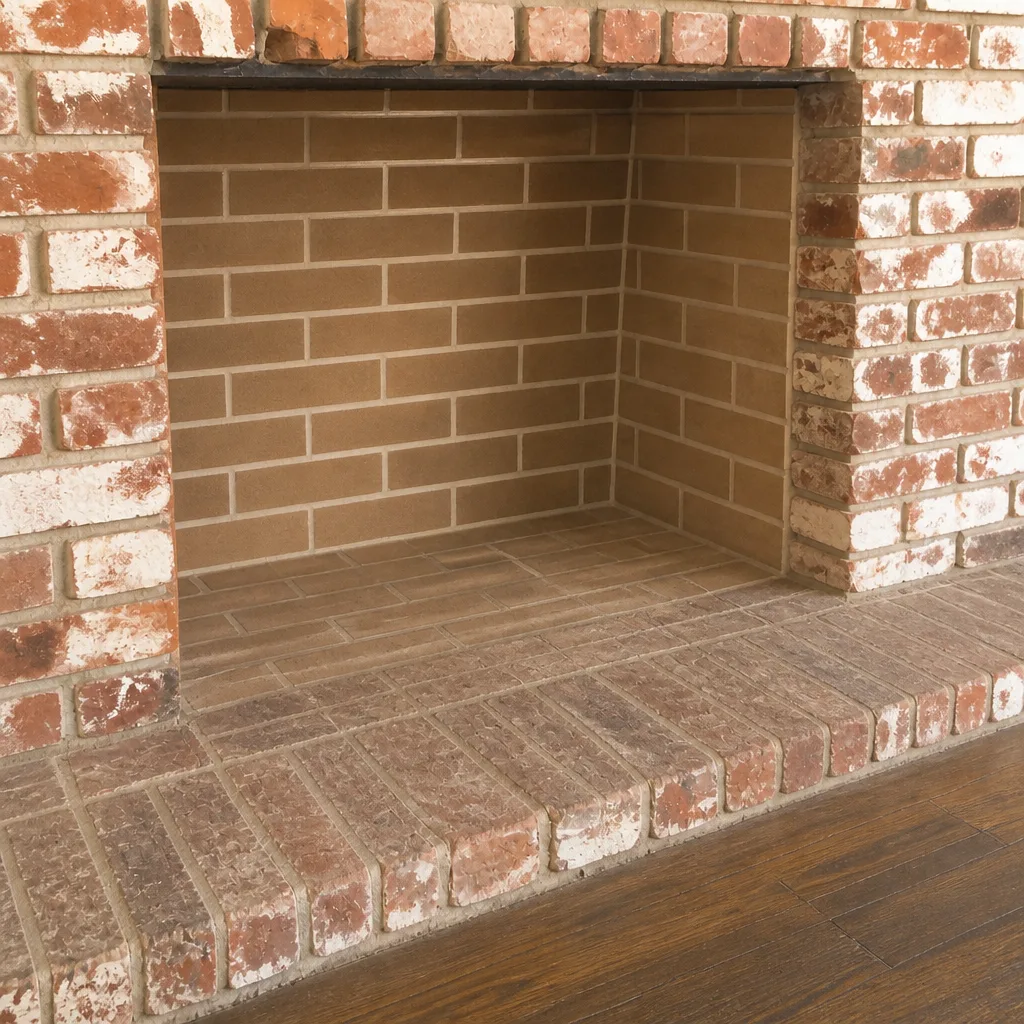
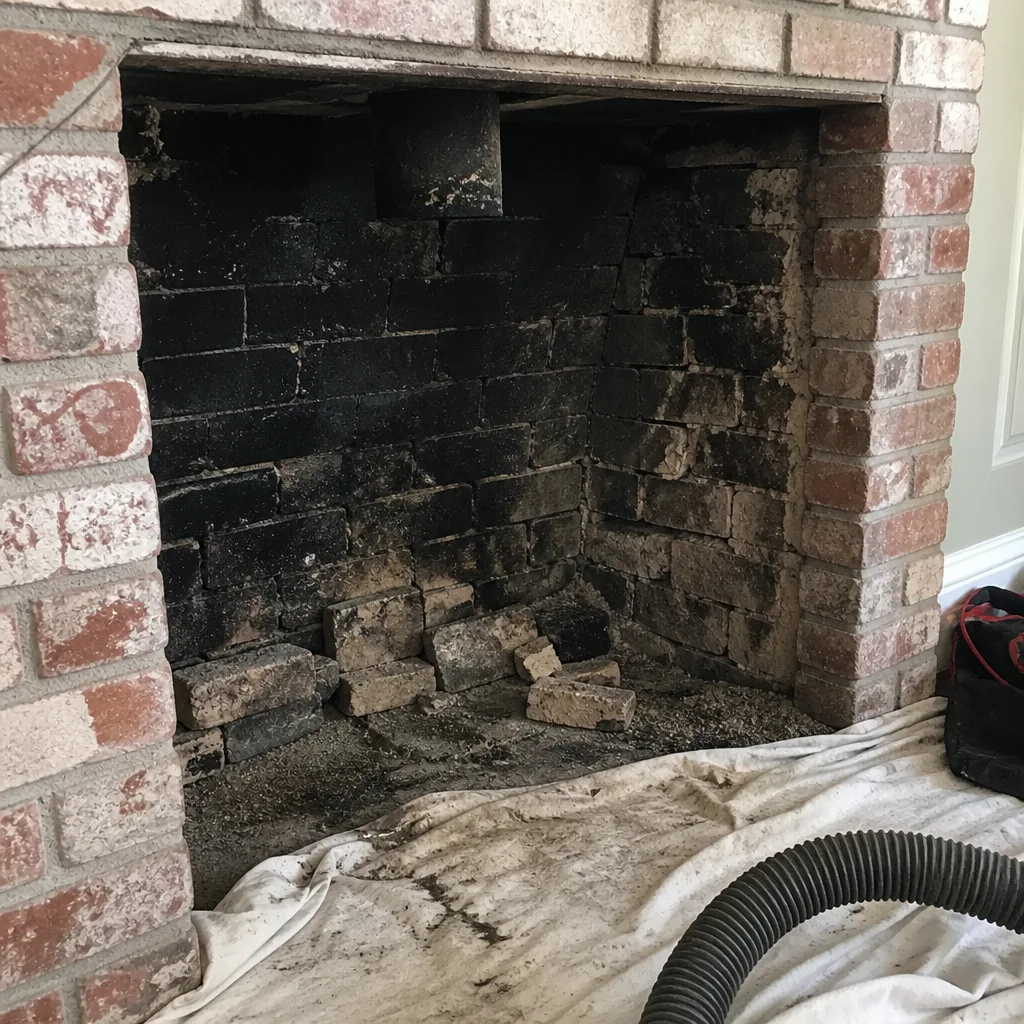
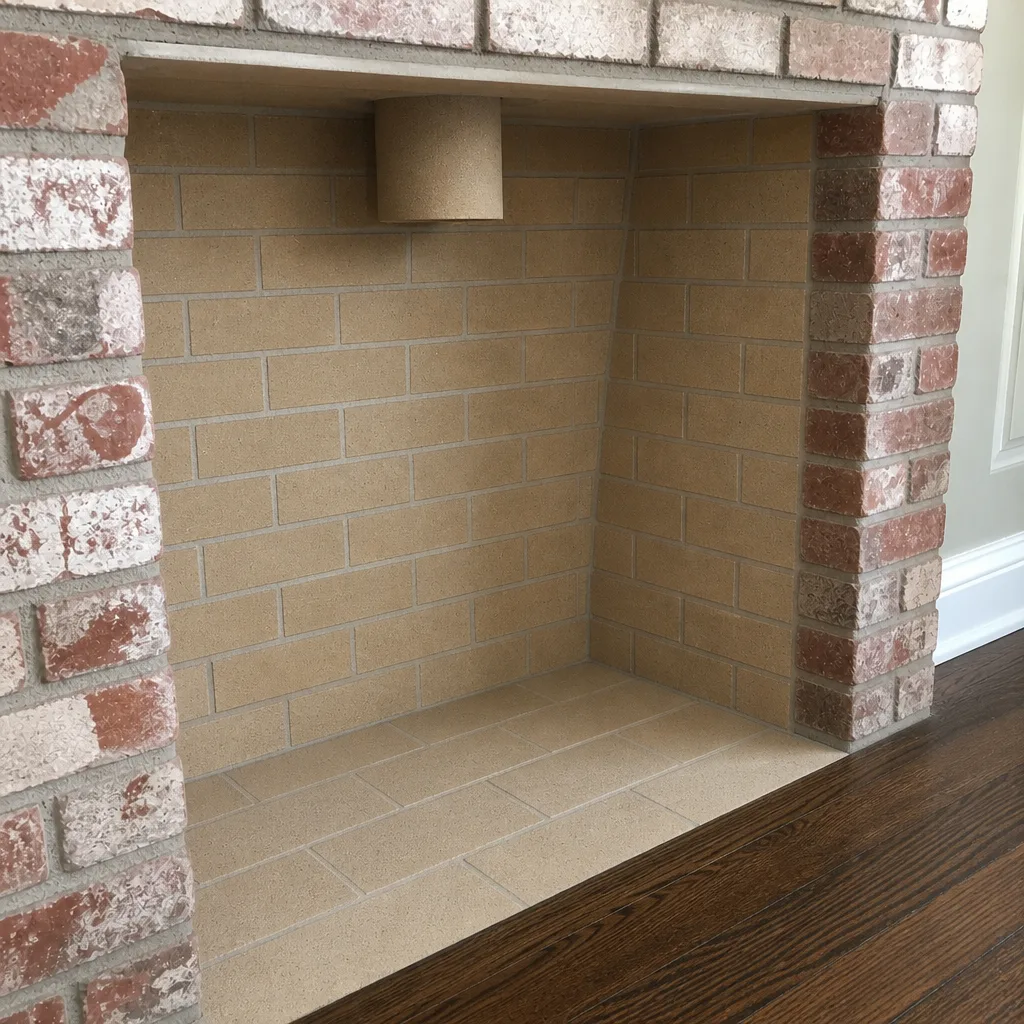
See the difference
 Before
 After
 Before
 After
 Before
 After
When to Call a Professional
Call a chimney specialist in these situations. If you’re in a house with a masonry chimney and you’ve never had it inspected, call now. If you’re buying or selling a Vacaville home and the chimney is part of the conversation, call before closing. If you smell chimney odor inside the house, if the fireplace drafts poorly, if the firebox bricks are cracking, or if you see spalling or missing mortar on the chimney’s exterior, stop using the fireplace until it’s examined. Any of those signs could indicate a problem that shouldn’t go another season. Chimney Sweep Vacaville offers free estimates in Vacaville. Call (844) 797-8347. We answer 24/7. Fast dispatch from 7am to 7pm, Sunday through Friday. Our technicians have up to 9 years of experience, and they work on chimneys only.
Frequently Asked Questions
No. Routine chimney cleaning does not require a permit in Vacaville. Sweeping, creosote removal, and inspection are maintenance, not construction. The moment the work involves a liner, a firebox rebuild, or structural masonry repair, it becomes an alteration and typically needs a permit from the City of Vacaville. Call (844) 797-8347 for an exact quote on your job; estimates are free.
Only if the inspection shows the flue has a defect that a liner is the fix for – cracks, gaps, deteriorating clay tiles, or a flue that isn’t the right size for the appliance. A proper Level 2 inspection with a camera survey is how you know, and the photos let you see the reason for yourself. If the flue is sound, a liner isn’t needed, and we’ll tell you so. Call (844) 797-8347 for an exact quote; estimates are free.
You lose your ability to know the condition of the flue, which is the thing you can’t see. A damaged or blocked flue can let heat or combustion gases into the house instead of up the chimney, and that’s a safety problem, not an inconvenience. A scheduled inspection is cheap compared with the alternative. Call (844) 797-8347 for an exact quote; estimates are free.
Once a year for a home with a regularly used wood-burning fireplace, and the same annual rhythm applies to gas appliances for a safety check. A chimney used heavily, or one that’s been sitting unexamined for years, may need to be looked at sooner. If you’re not sure when it was last examined, book an inspection and start the record. Call (844) 797-8347 for an exact quote; estimates are free.
Yes. The Bay Area Air Quality Management District covers Vacaville, including its Spare the Air burn bans on poor-air-quality days, and the rules reach into the appliance itself. Older non-certified fireplaces and wood stoves are restricted, and adding a new liner without addressing the appliance doesn’t fix the compliance issue. A specialist can check what you’re burning and venting before you buy or install anything. Call (844) 797-8347 for an exact quote; estimates are free.
Yes, in practice. California’s transfer disclosure statement asks about permitted work, and a buyer’s inspector or chimney specialist can spot a reline with no permit record. The friction is avoidable by pulling the permit in the first place. If you already have unpermitted work, a specialized inspection documents what’s there and supports fixing it properly. Call (844) 797-8347 for an exact quote; estimates are free.
The Bottom Line
Sweeping is maintenance and needs no permit in Vacaville. Anything that changes the structure of the chimney – a reline, a firebox rebuild, structural masonry work – is an alteration, and that’s where City of Vacaville permits and BAAQMD rules come in. The two facts worth remembering: the permit step is the cheapest part of the job, and the inspection report is what protects you at the sale. Document the work, keep the photos, and name the materials. A chimney-only specialist gives you all three, and tells you clearly when the work can wait.
If you’d like an inspection or a scope before you commit to anything, we’re glad to help. A chimney sweep visit is the starting point, and a full inspection is what tells you what’s next. If the inspection points toward repair or relining, our chimney repair work covers it, from HeatShield resurfacing to a DuraFlex liner system. We’re Chimney Sweep Vacaville, and we work in Vacaville and the surrounding area. Start at the Chimney Sweep Vacaville home page if you’re not sure where to begin.
Call (844) 797-8347 for a free estimate. We answer 24/7. Fast dispatch from 7am to 7pm, Sunday through Friday.
Written by the team at Chimney Sweep Vacaville.